At Genesis, we believe that healthy soils are the foundation of resilient agricultural systems — and of the businesses that source directly from nature. They are also the first and most essential benefit of regenerative agriculture.
Measuring soil health at scale, across different landscapes, and over time is challenging. To address this, we developed a practical, science-based approach that helps make soil resilience measurable and trackable. Our indicators are designed to be reliable, comparable, and actionable, showing how ecosystems persist, adapt, and regenerate — and providing a way to quantify the benefits of regenerative practices for both farms and the broader value chains.
Our methodology follows the recommendations of the European Soil Monitoring Directive and is now applied across more than 200,000 hectares in 15+ countries, with the support of leading scientific partners (see our references).
Soil health: what does it mean, and how is it assessed?
Soil health reflects a soil’s ability to perform its functions: feeding plants, storing carbon, retaining water, supporting biodiversity, and remaining resilient under climate stress.
To translate these functions into measurable data, we carry out physical, chemical, and biological analyses of the soil (texture, pH, organic matter, etc.) and track key scientific indicators:









We also integrate satellite data (Sentinel-2), such as natural habitats, soil cover or and crop rotation diversity, to enrich our understanding of the ecosystem health. This work is supported by the European Space Agency.
How can soil health be measured at scale, across diverse contexts?
Two soils that look identical on paper — with the same raw measurements — can behave very differently depending on their context (texture, climate, biome).
To account for this, we evaluate each soil within its pedoclimatic cluster — a grouping of areas with similar natural characteristics in soil, climate, and vegetation.
This approach helps us avoid misleading comparisons between plots and clearly distinguish:
The soil’s natural potential in a given context
The effects of agricultural practices that improve or degrade it.
For each cluster and each indicator, we define threshold values:
Reference value – representing healthy, naturally functioning soil
Critical value – indicating degraded soil
Intermediate range – covering conditions between the two.
These thresholds allow us to calibrate raw measurements against what is realistic for each soil’s natural context. They are based on scientific literature, regulatory standards, or statistical models built from large-scale datasets (over 50,000 soil samples included to date).
Thanks to this calibration, Genesis can transform raw indicator values into a 0–10 score, adapted to the specific local context.

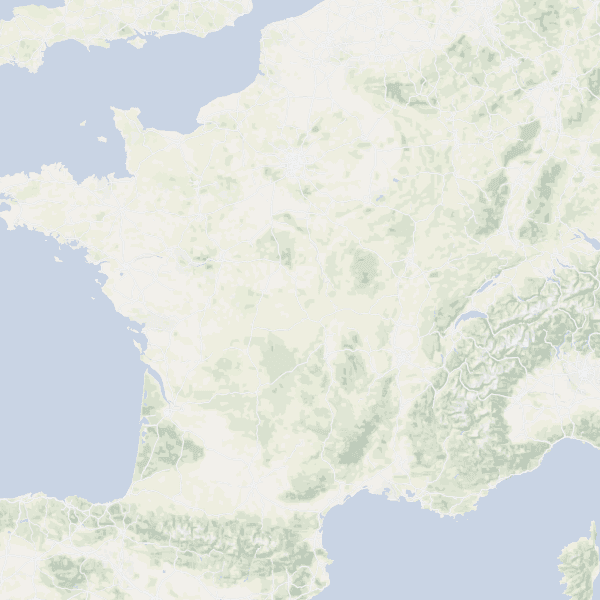
Let's look at some use cases
To show how Genesis methodology works across different types of raw data, we applied it to two practical use cases.
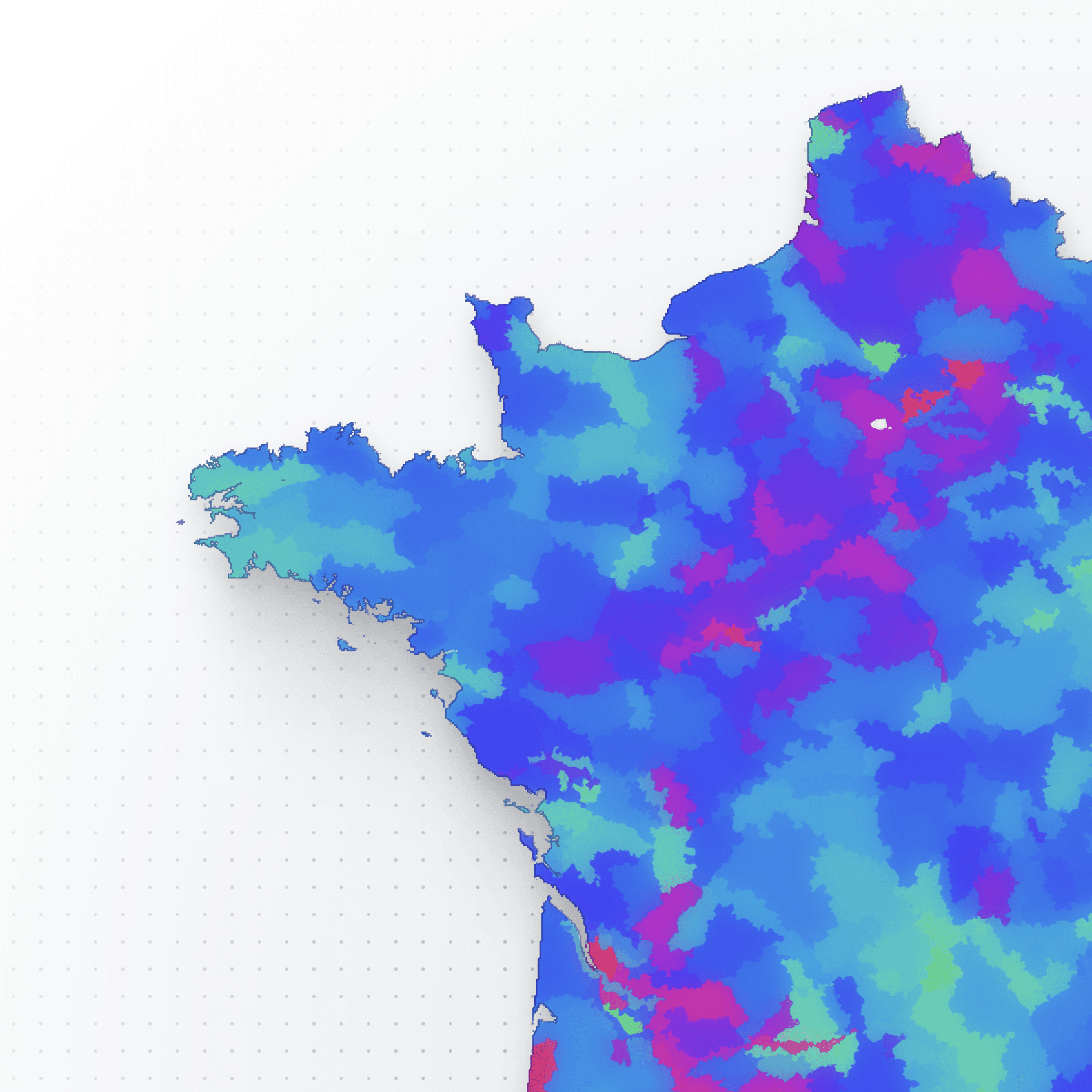
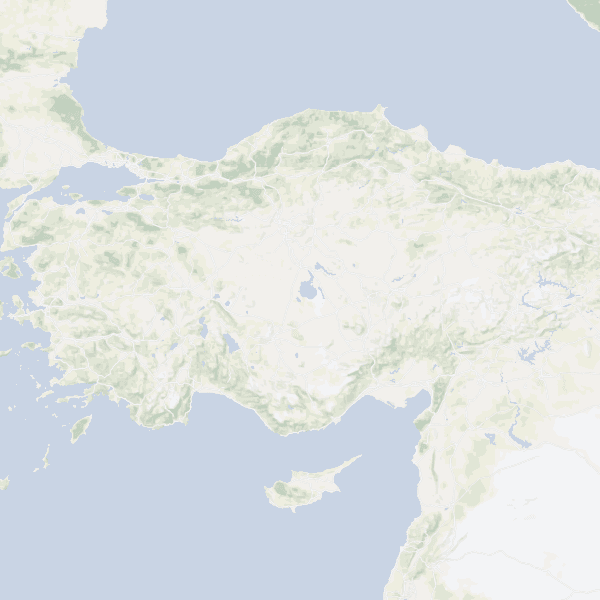
Soil health across France
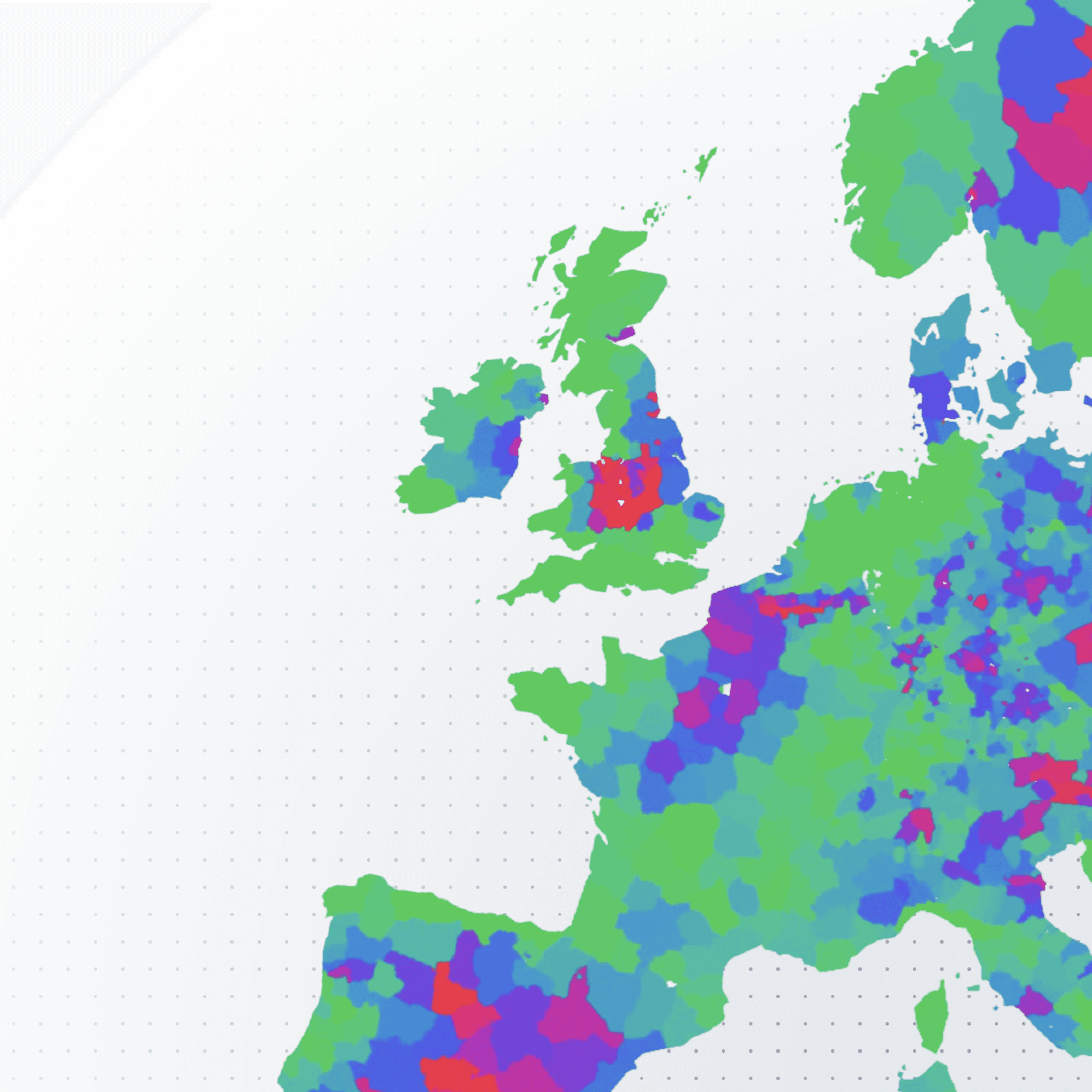
Soil organic carbon across Europe
How can soil health data help monitor agricultural transition ?
To make soil health data easier to understand and use to pilot agricultural value chains, we created the Genesis Resilience Score — a single 0–10 indicator that acts as both a decision-making tool and a soil health “thermometer.” It helps track changes in soil over time and supports strategic and operational decisions for businesses and field teams.
The score combines key soil indicators mentioned above — total organic carbon, microbial biomass, pollution, erosion, and water holding capacity — into a weighted geometric mean, with weights informed by our soil scientists’ expertise.
Carbon
7.8
Water
5.2
Biodiversity
8.3
Erosion
1.8
Pollution
6.5
6.5
Good
0
10
Think of the Genesis Resilience Score as a “Nutri-Score” for soil health: it turns complex measurements into an easy-to-read, actionable number that tracks soil health dynamics over time, while staying firmly rooted in scientific rigor.